Should you buy a pop-up trailer to keep your vacation costs under control, or keep racking up seasonal expenses?
Every year, the question of vacation budgets comes up with the same intensity. Between rising vacation rental costs, transportation expenses, and the general increase in the price of tourist services, the cost of a summer vacation can quickly exceed expectations. In this context, more and more travelers are asking themselves: does spending the summer in a camper really help you stay within your budget?
Analyzing vacation costs requires looking beyond a simple, immediate comparison between renting and buying. It is necessary to take into account frequency of use, the payback period, and the property’s residual value. Buying an expandable trailer, particularly in the high-end segment, follows a different logic: it is a long-term investment, not a one-time expense.
How much does a summer in a vacation rental really cost?
Before making a comparison, it’s important to consider the most common scenario. For a family or couple taking a two-week vacation during peak season, the rental budget may include rent, service fees, cleaning costs, a security deposit, food expenses, and sometimes additional transportation costs.
In popular tourist destinations, summer rates have risen steadily in recent years. Added to this is the constraint of fixed booking periods, which are often concentrated in July and August. As a result, it becomes difficult to reduce vacation costs.
The costs aren’t limited to the main week. Long weekends, short off-season trips, or unexpected travel also generate additional expenses. Over several years, these recurring costs can add up to a significant amount without contributing to your net worth.
How much does a pop-up trailer cost, and how should you evaluate the long-term costs?
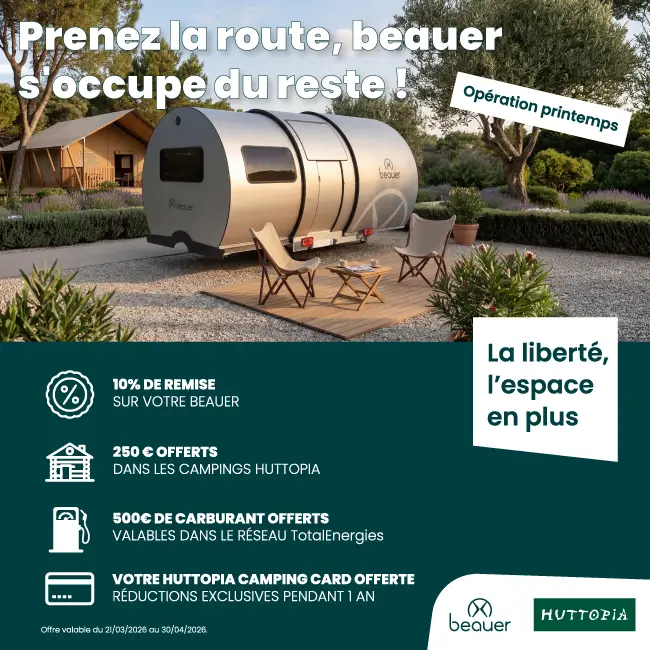
The price of an extendable trailer varies depending on the model, the options selected, and the level of equipment. A high-end trailer, designed and manufactured in France—such as a Beauer—represents a significant initial investment. However, it is essential to view this cost from a long-term perspective.
Unlike a rental expense, purchasing a trailer constitutes an asset. It retains residual value and can be resold at a later date. Its true cost must therefore be assessed by taking into account its use over several seasons.
Let’s consider a simple scenario: an owner uses their extendable trailer for five to ten summers, including long weekends and off-season trips. The cost per trip automatically decreases as the trailer is used more frequently. As the number of trips increases, the investment is spread out over time.
You should also factor in related expenses: specialized insurance, routine maintenance, and potential storage costs. However, a non-motorized trailer is generally less prone to mechanical costs than a motorhome. Maintenance primarily focuses on structural components and interior fittings.
The logic changes: instead of paying annually for temporary lodging, the owner has access to a flexible space at any time, with no booking requirements. This flexibility significantly affects how the cost of a vacation is perceived.
Does buying a trailer really help you save on vacation costs?
The answer depends on how often you use it. For someone who travels infrequently, renting on an as-needed basis will likely be more cost-effective in the short term. On the other hand, for a household that takes frequent trips, an expandable trailer gradually becomes a more financially sensible option.
The purchase also offers strategic flexibility. It allows you to travel during the off-season, when campgrounds and RV parks charge lower rates. This flexibility helps spread out the budget over the course of the year.
In addition, a high-end motorhome offers a structured level of comfort that helps avoid certain extra costs. The ability to cook on-site, set your own pace, and choose less crowded destinations reduces expenses related to dining out or standardized tourist activities.
Beyond the numbers, there is an intangible aspect. Buying a trailer changes the way you plan your vacations. Accommodations are no longer an uncertain factor that needs to be secured every year. This stability allows you to plan ahead more effectively, choose your travel dates, and manage your expenses with greater peace of mind.
The point is not to claim that a summer in a campervan is automatically cheaper in the first year. Rather, it is about analyzing vacation costs over the long term, taking into account frequency of use, resale value, and flexibility in planning.
In 2026, with tourism prices remaining high during the peak season, the expandable camper van represents a credible alternative for many. It does not eliminate travel expenses, but it changes the nature of those expenses. Instead of repeated spending without building equity, it offers a transformative investment in a mobile and self-sufficient lifestyle.
Choosing to buy a camper trailer therefore involves weighing two different approaches: recurring seasonal expenses versus an investment in a durable asset. The right choice depends on how often you travel, your initial financial resources, and your medium-term plans. In any case, the decision warrants a comprehensive analysis rather than a superficial comparison.