Should we keep renting every summer, or should we consider buying a pop-up trailer as a real vacation investment?
Every year, the same routine plays out for thousands of households: searching for a vacation rental, comparing prices, dealing with higher rates during peak season, dealing with date restrictions, and paying extra fees. Faced with this routine, a question is coming up more and more often: what if we changed our approach? Could buying an expandable trailer instead of making multiple reservations be a more practical long-term alternative for accommodations?
Buying a campervan is no longer just about a one-time leisure activity. It is now part of a broader consideration of freedom of movement, managing your vacation budget, and how you want to live in a place temporarily. Comparing buying a campervan to renting one for the season involves analyzing not only the immediate cost, but also the value of use, flexibility, and long-term planning.
Is short-term rental always the simplest and most profitable option?
Vacation rentals appeal to people because of their apparent simplicity. You book, you arrive, you enjoy your stay, and then you leave. There’s no maintenance to worry about, no storage, and no mechanical responsibilities. This model is ideal for those who don’t travel often or who prefer to visit destinations far away each year.
However, the situation has changed. Summer rates are steadily rising, particularly in popular tourist areas. On top of that, there are cleaning and service fees, sometimes high security deposits, and increasingly limited availability during certain periods. As a result, vacation costs are becoming a significant expense, especially for families.
Beyond the cost, renting imposes a fixed framework: set dates, a predetermined location, and standardized amenities. The experience is comfortable, but rarely personalized. It depends on a shared schedule, which is often fully booked in July and August.
From this perspective, the money spent each year does not build equity. It is spent on immediate consumption. For some people, this recurring pattern may raise a question: wouldn’t it be better to invest differently—in durable, reusable equipment?
How does buying a slide-out RV change the way you think about vacation investments?
Buying a pop-up trailer turns an expense into an asset. It’s no longer just a matter of paying for a week or two, but of acquiring an asset that can be used for many years, at different times of the year. The trailer you buy becomes a tool for freedom, a mobile space available whenever you need it.
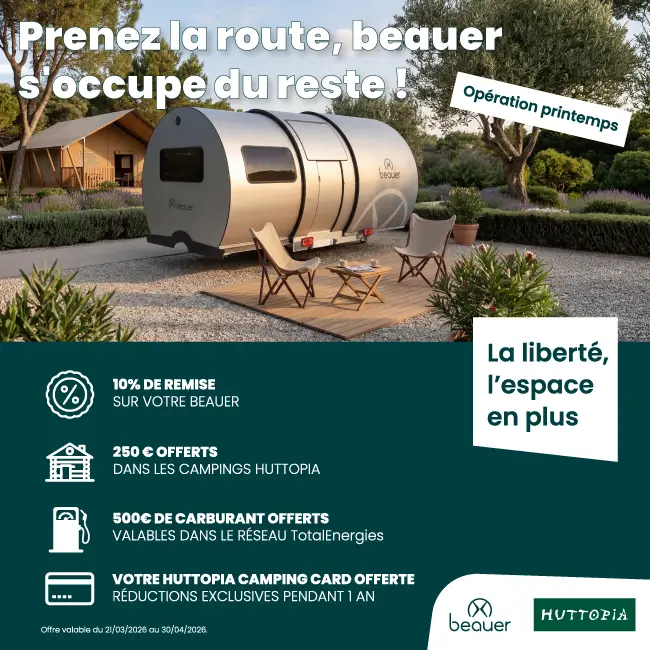
An extendable trailer like the Beauer offers flexibility that extends beyond the summer season. Long weekends, off-season vacations, impromptu getaways: its use is no longer limited to a specific time frame. This ability to take more trips fundamentally changes the concept of cost-effectiveness. It’s no longer a matter of weekly rates, but of frequency and freedom of use.
Investing in a vacation home takes on a whole new dimension. It’s not just a matter of comparing the purchase price to several years of rental costs. You also have to factor in the intangible value: independence, spontaneity, the ability to personalize the space, and the freedom to choose a location without worrying about availability.
In addition, an expandable trailer can also open up additional opportunities. Some owners choose to rent it out occasionally when they are not using it, provided they comply with applicable regulations and insurance requirements. While this should not be a primary strategy, this option can help optimize the use of the property.
How do you decide between renting a vacation home and buying a trailer?
The choice depends primarily on your lifestyle. If vacations are infrequent, spaced far apart, and take you to distant locations, a vacation rental remains a sensible option. It offers a turnkey solution without a long-term commitment.
On the other hand, if you travel regularly, if your desire to get away extends beyond the summer months, and if the freedom to choose where to stay is a priority, then a pop-up trailer emerges as a particularly appealing alternative accommodation option. It allows you to break free from a restrictive booking system and regain control of your schedule.
It is also important to consider the asset value aspect. Unlike annual rental expenses, a motorhome retains some residual value. Even though it naturally depreciates over time and with use, it remains an asset that can be resold. This factor changes the financial analysis over several years.
Finally, buying a pop-up trailer prompts a broader reflection on how you want to travel. It’s no longer just about finding a place to stay, but about embracing a more independent and flexible way of traveling. The trailer becomes a personal space, tailored to your needs, that you can return to every time you set out.
Whether to buy or continue renting is therefore not just a matter of immediate budget. It is a philosophical choice. Seasonal rentals are based on the idea of occasional use. Buying a pop-up trailer, on the other hand, is part of a long-term vacation investment strategy, centered on freedom, flexibility, and regular use.